- altius
- 0 Comments
- 548 Views
Artificial Intelligence (AI) has become one of the most transformative technologies in the creative industry. From generating logos and website layouts to writing content and creating user interfaces, AI-powered tools are changing how design work is done. As these tools continue to improve, many businesses and designers are asking the same question: Will AI replace designers? While AI has undoubtedly revolutionized the design process, the reality is far more nuanced than a simple yes or no.
Artificial Intelligence (AI) has become one of the most transformative technologies in the creative industry. From generating logos and website layouts to writing content and creating user interfaces, AI-powered tools are changing how design work is done. As these tools continue to improve, many businesses and designers are asking the same question: Will AI replace designers? While AI has undoubtedly revolutionized the design process, the reality is far more nuanced than a simple yes or no.
The biggest misconception is that design is only about creating visually appealing graphics or interfaces. In reality, professional design is about solving business problems, understanding user behavior, and creating experiences that drive engagement, conversions, and customer satisfaction. AI can generate beautiful visuals within seconds, but it cannot fully understand a company’s vision, customer emotions, market positioning, or long-term business goals. These are areas where human designers continue to provide immense value.
AI excels at automating repetitive and time-consuming tasks. Designers can now generate multiple design concepts, create marketing assets, build wireframes, and even write UX copy with remarkable speed. This allows teams to spend less time on manual production and more time refining ideas and solving complex problems. Instead of replacing creativity, AI is becoming a powerful assistant that enhances productivity and accelerates the design workflow.
However, there are significant limitations to what AI can achieve on its own. Great design requires empathy, critical thinking, and strategic decision-making. A successful designer conducts user research, interprets customer feedback, understands business objectives, and makes design decisions based on human behavior rather than patterns in existing data. AI can analyze information, but it cannot genuinely understand why people behave the way they do or predict how emotions influence purchasing decisions. These uniquely human abilities remain at the core of exceptional design.
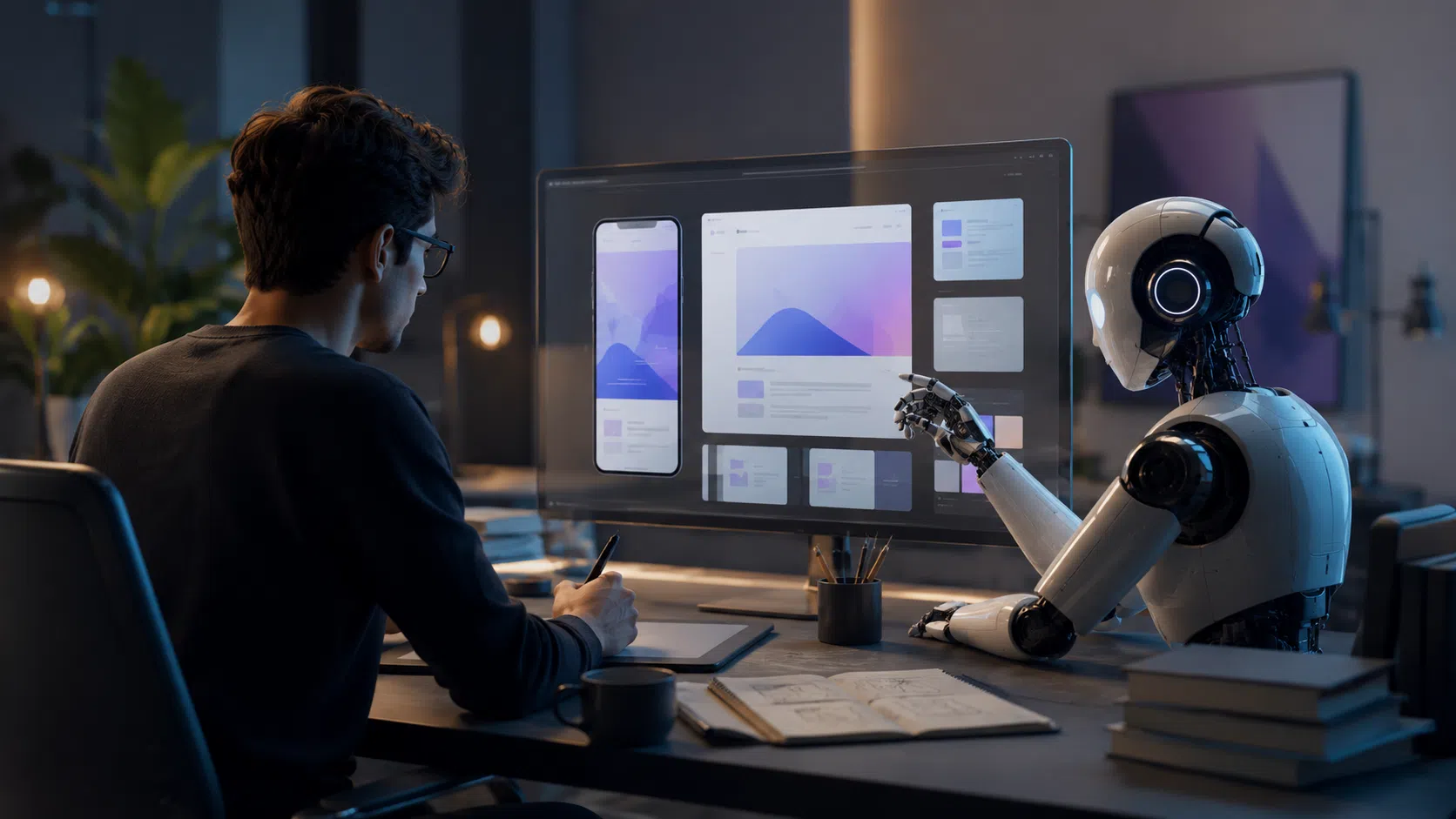
The future of design is not about competing with AI but collaborating with it. Designers who embrace AI tools can work faster, explore more creative directions, and deliver projects more efficiently. Rather than spending hours creating repetitive layouts or resizing assets, they can focus on innovation, storytelling, accessibility, product strategy, and improving the overall user experience. Businesses benefit from this combination because it results in better products delivered in less time without sacrificing quality or creativity.
For organizations investing in digital products, the smartest approach is not replacing designers with AI but empowering designers with AI. Companies that combine experienced design professionals with AI-powered workflows are better positioned to create websites, applications, and digital experiences that resonate with customers and achieve measurable business outcomes. Human designers provide context, strategy, and creative judgment, while AI accelerates execution and supports rapid experimentation.
Looking ahead, the demand for skilled designers is unlikely to disappear. Instead, the role of designers will continue to evolve. Future designers will be expected to understand artificial intelligence, leverage automation effectively, and focus more on strategic thinking, user research, product innovation, and business growth. Those who continuously learn and adapt will become even more valuable in the AI era.
So, will AI replace designers? The answer is no. AI will replace repetitive tasks, automate production work, and improve efficiency, but it cannot replace human creativity, empathy, strategic thinking, or the ability to deeply understand users and businesses. The future belongs to designers who embrace AI as a collaborative partner rather than viewing it as a competitor. Together, human creativity and artificial intelligence will shape the next generation of exceptional digital experiences.
Conclusion
AI is transforming the design industry, but it is not eliminating the need for designers. Instead, it is redefining their role. Businesses that combine human expertise with AI-powered tools will build stronger brands, create better user experiences, and achieve greater digital success. In 2026 and beyond, the winning formula is not AI versus designers—it is AI with designers.